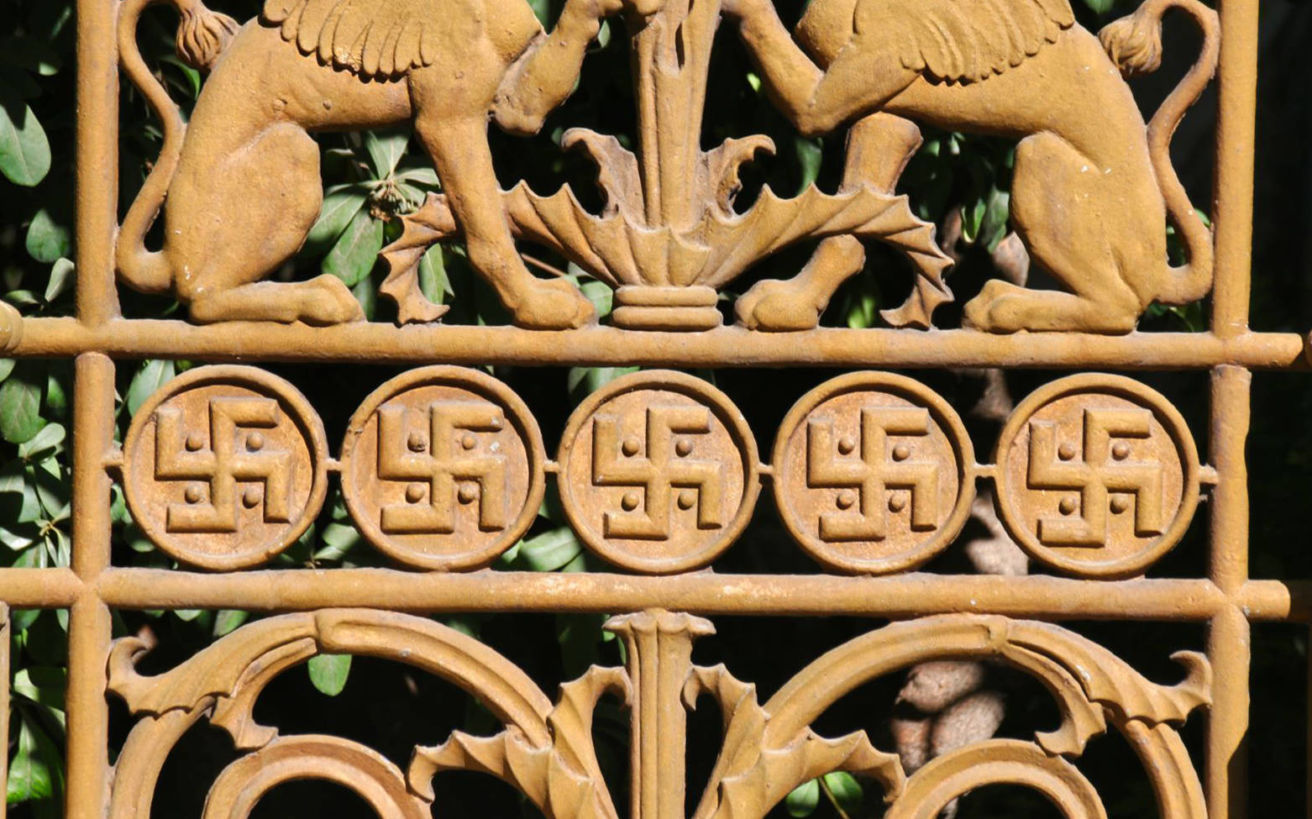
The swastika is one of the most hated symbols on the planet. The reason is that, obviously, it has been connected with the atrocities of the Nazis who adopted it as a symbol and with that in their flag they sowed death and doom in Europe.
It is well known, however, that Hitler was simply ostracized and, in essence, infected an ancient symbol of good fortune. For this reason, after all, even today we find it in many places that have nothing to do with Nazi ideology.
One of these places is located in the center of Athens. On the street University. The "initiates" pass by him and admire him or just smile. The "unsuspecting" stand short, look carefully to make sure that they really see what they saw and wonder "what exactly is happening here"!
They are the same reasons that made the first German invaders who set foot in Athens in 1941 to stand outside it to be surprised and in the end to order it to build their first informal headquarters there.
Ilios Melathron, Schliemann and Ziller
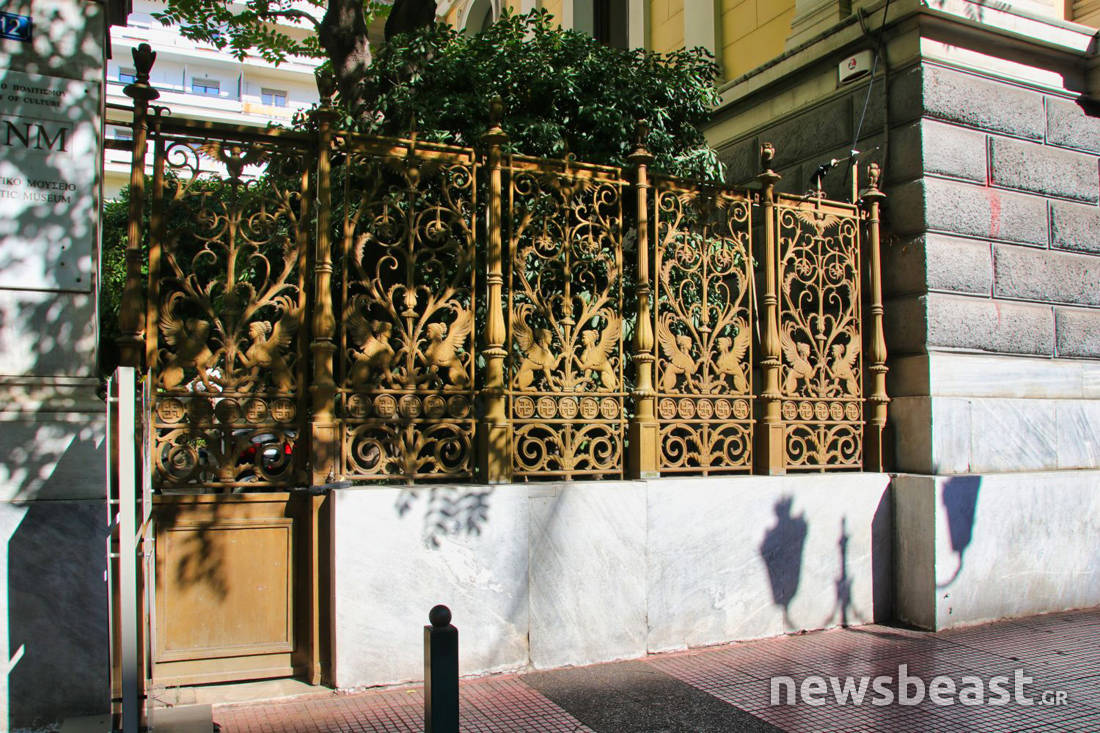
In 1869 Henry Schliemann married his Greek wife, Sophia. The very next year he decides to stay with her permanently in Greece. In order to house his family, however, he wants something impressive without worrying about the cost.
He entrusts, therefore, to his personal friend and famous architect Ernesto Ziller the design of an imposing villa which he will build in the center of Athens. The great Ziller is inspired by the Italian Renaissance and the neoclassical spirit and creates a real jewel.
"I lived my whole life in a small house, but I want to spend the rest of my years in a big house, I ask for space and no more, choose any rhythm you want, my only conditions are a wide marble staircase rising from the ground to the upper floor and on the top of a huge tower "Schliemann allegedly told Ziller ..

He shows the plans to Schliemann, who is excited. In 1878 the work begins which will last two whole years and will be completed in 1880. On January 30, 1881 Schliemann gives a big reception to present his impressive mansion in his circle.
The building acquires the name "Ilios Melathron" (The palace of Troy) and as it is known its construction cost (the astronomical amount of the time) 439.650 drachmas!
The decoration and the use of the swastika 

The decoration of the building expresses Schliemann's great passion for antiquity and harmonizes with his efforts to be projected as a man of letters and arts.
The ceilings and murals are the work of Slovenian painter Juri Subic, known for his work in Vienna and Paris. The written decoration of the walls is characterized by the reproduction of themes from the frescoes of the houses of Pompeii and the inscription of selected excerpts from works by ancient Greek authors, such as Homer, Hesiod, Pindar and Lucian.
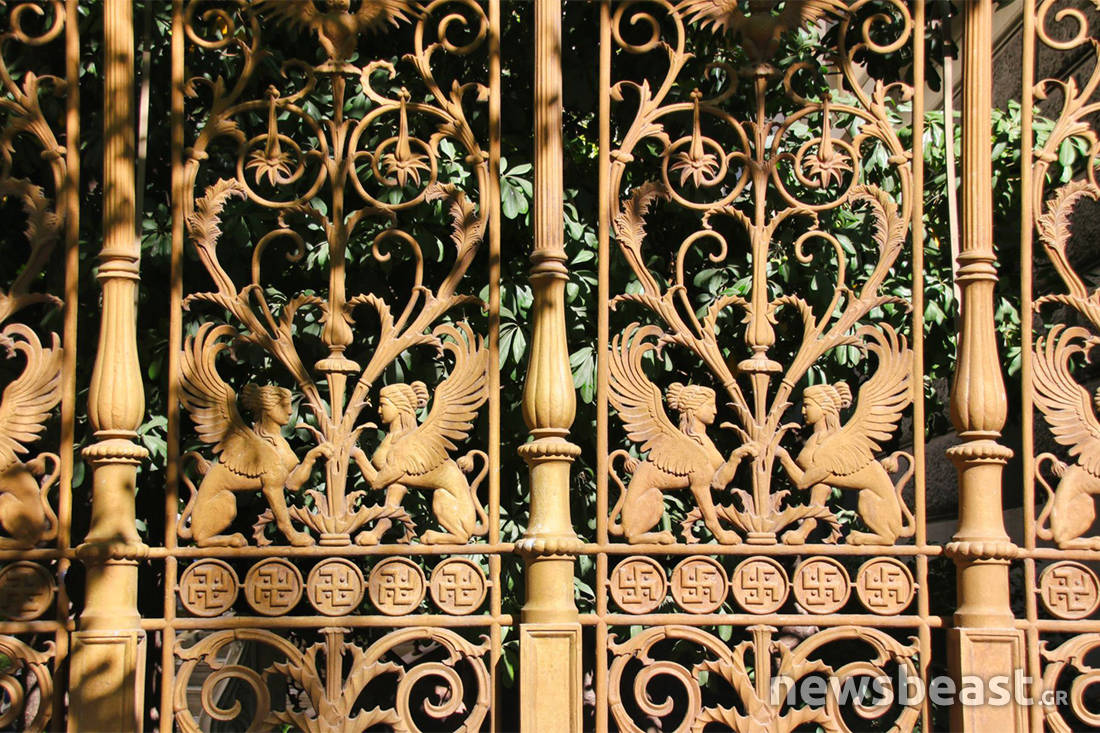
The metal decorations of the exterior and interior were made in a workshop in Piraeus. The decoration of the mansion was completed by clay copies of ancient statues made in Vienna, three of which were placed in the garden and twenty-four around the roof.
The mosaic floors, made by Italian voters, depict finds from Schliemann's excavations or themes inspired by them. And this is exactly where this… "paradox" is happening, which is still talked about today.
Schliemann wanted to take to the mansion and the swastika he had found as a symbol in performances in Troy. The swastika has an extensive history. The motif seems to have been used for the first time in Neolithic India but from then on it passed to various cultures around the world in a mysterious way since everyone used it in the same way and with the same meaning.
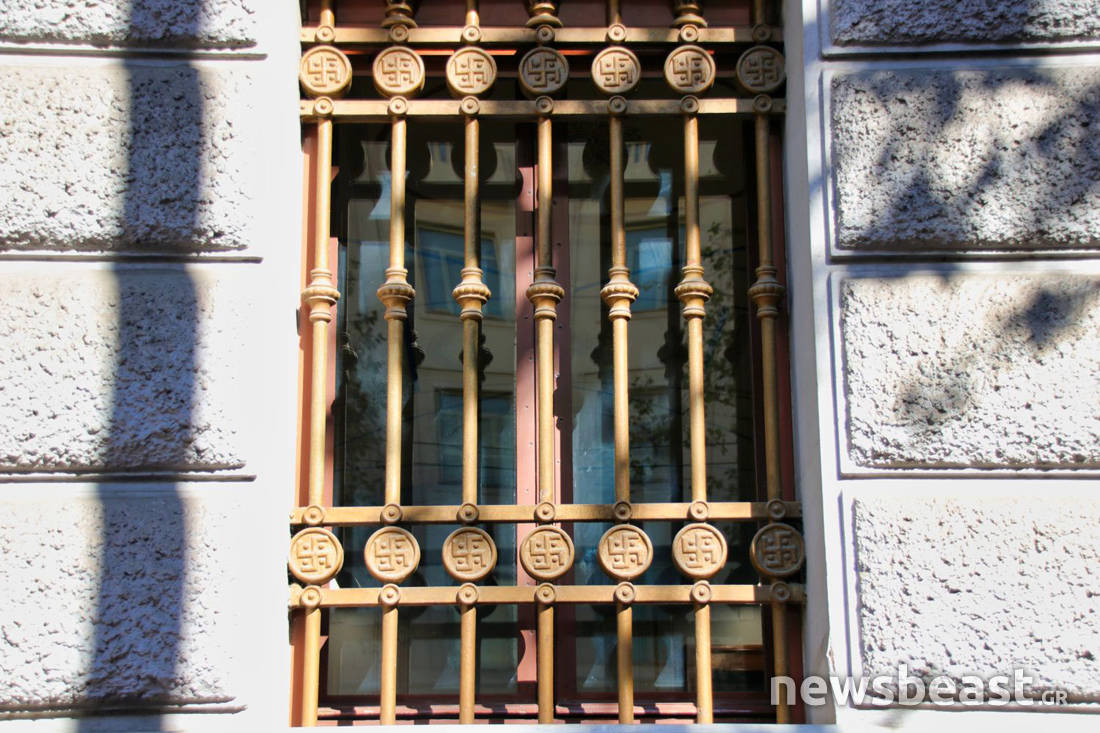
The word swastika is Sanskrit "svasktika" and meant prosperity and luck. In various countries the swastika is known by another name. In China it is called "Wan", in Japan "Manji", in England "flyfot", in Germany "Hakenkreuz" and in ancient Greece tetraskelion or tetragamadion.
So when Schliemann chose it to decorate his mansion in 1878, he could not have imagined that about six decades later it would become a symbol of death.
The Nazi invasion of Athens and the use of the building today
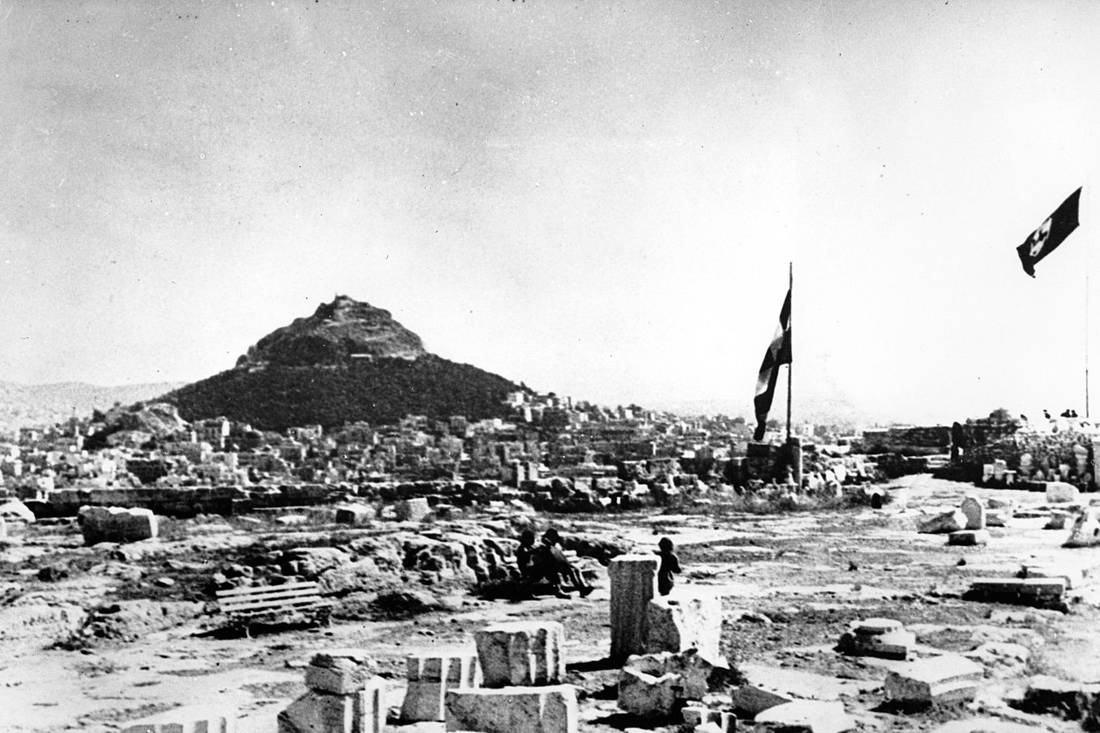
It is said that when on April 27, 1941 the Nazi Hordes set foot in Athens, Ilios Melathron was one of the first buildings (if not the first) they ordered.
That black Sunday morning, motorcyclists and armored vehicles of the 2nd Armored Division, led by Lieutenant Fritz Dirfling, entered Athens from the northern suburbs. The Nazis arrived in the center of the capital from Tatoiou Street. The Athenians had "welcomed" them with doors and windows tightly closed. Athens was a dead city.
One of the German officers who participated in the procession of vehicles "descending" Panepistimiou Street noticed that the barred door of the impressive mansion had… something special. The procession stopped, he himself went down to inspect it and a little while later, impressed by what he discovered, he informed his superiors.

For a short time Schliemann's mansion was transformed into an informal headquarters until gradually various services of the German occupation troops and Kommandatur were moved and installed a few meters lower at the University, at the National Insurance Building in Korai Square.
Before all this, however, and specifically in 1926, the building was sold to the Greek State to cover the needs of the Schliemann family, instead of the amount of 27.000.000 drachmas. The expense was covered through the bequest of Alexandros Soutzos, in order to house the Museum of Fine Arts and the Numismatic Museum. However, from 1929 the building housed successively the Council of State (1929-1934), the Supreme Court (1934-1980) and the Court of Appeal (1981-1983).
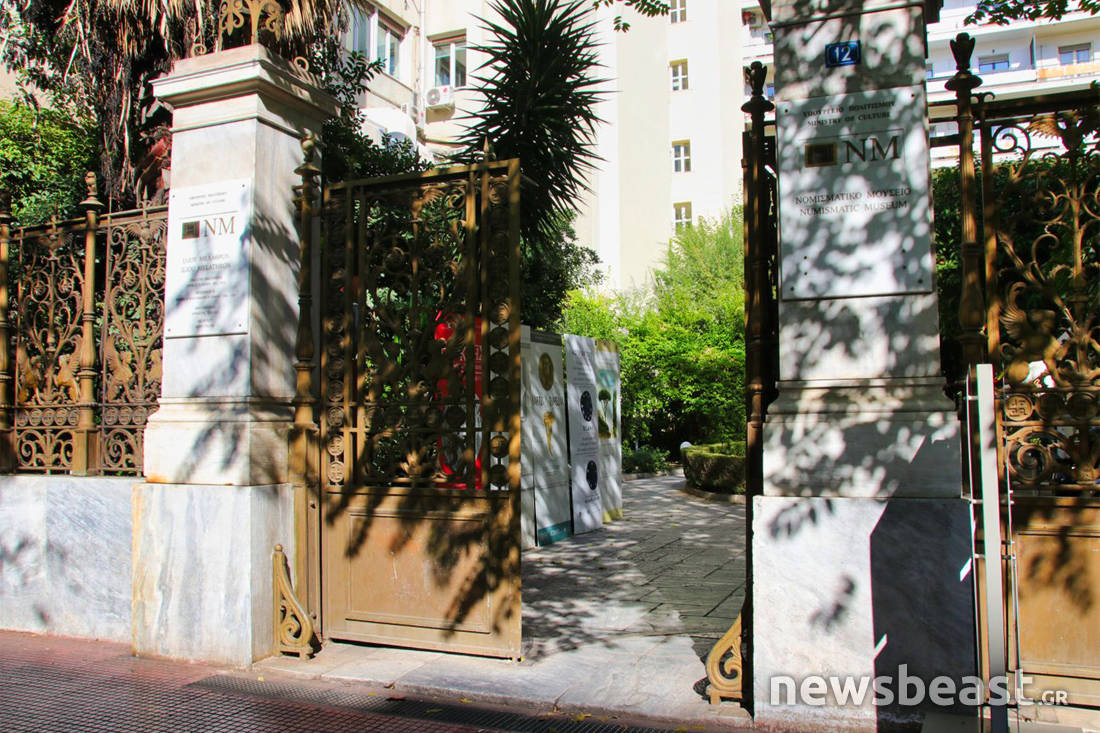
In 1983, the State Real Estate Company granted Ilios Melathron to Ministry of Culture. After restoration works of the building, the Numismatic Museum is housed in Ilios Melathron, initially in 1998 with its permanent exhibition on the first floor and since 2003 with the transfer of its collections, library and offices.