It was April 20, 1946. For the first time in a sports match, the phrase "For Greece" is heard. And yet the name of the man who dedicates his victory to his homeland is unknown to the general public.
Stelios Kyriakidis is the marathon runner who on May 23, 1946, in his honor, illuminated the Acropolis. It was the first time, after the Occupation, that the lights were turned on on the Holy Rock.
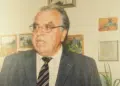
Stelios Kyriakidis was born on May 4, 1910 in Paphos. Son of a farmer, he showed from a young age that he had a tendency to walk. With the slightest reason, he "flew" from his village to the opposite and covered the distance of 20 km without any objection. As a teenager he now represented his village in agricultural struggles and in 1930 he enrolled in the Olympia Limassol gymnastics club, where he remained a member until his death.
In 1934 he moved to Athens and went to work for PPC (then Electricity). He represented Greece in the Balkan Games while he managed to overthrow the pan-Hellenic performance of Spyros Louis to get the best advice from a great Olympian:
"My child, Stelios, always run, because we Greeks were born to run. "Only then did we manage to live so many centuries," she allegedly told him when she received him at his home.
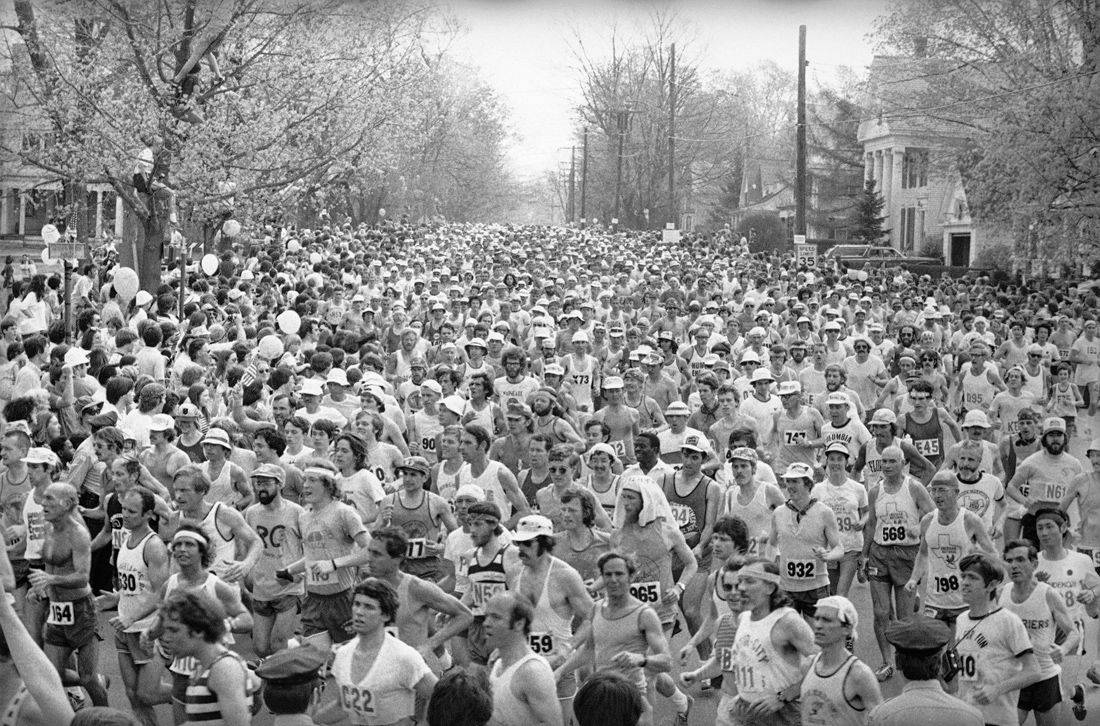
In 1936 Stelios Kyriakidis competes in the Berlin Olympics. This participation will save his life…
World War II and the occupation of our country by German forces find Stelios Kyriakidis in Athens. The Greek people are experiencing the sufferings of the Occupation. Stelios Kyriakidis is getting married and giving his wife, Iphigenia, half a loaf of bread as a wedding gift.
In 1943, Stelios Kyriakidis was arrested, along with 49 other people, for the murder of a German soldier. Luckily for him, the German service officer was a marathon runner. So when he sees in his wallet the accreditation of Kyriakidis from the Berlin Games and leaves him free. The rest are executed.
"Another time, when the Germans invaded our house, they found an album with photos from the Berlin Olympics. Hitler was on the front page. Hail Hitler! they said and disappeared. Thus, no one was ordered to go to Kyriakidis's house. "Since then, my father hid in our basement the allies who fell with the parachutes and later left for Egypt", his son, Dimitris Kyriakidis, has revealed.
The end of the German Occupation helps Stelios Kyriakidis return to the athletics arena. In 1946 he received an invitation from the organizers of the 50th Boston Marathon. He decides to take part, even though he has been away from sports for a long time.
But nothing was easy. The difficulties for traveling to Boston are many. First obstacle, the visa. An acquaintance with the then consul helps Stelios Kyriakidis to obtain the coveted document. Next has the next obstacle, the financial one.
Traveling by boat would deprive the marathoner of training, while the plane ticket was expensive. He decides to sell some furniture to secure the amount. PPC gave him $ 1.000 and the money was raised, but the ticket was issued without a refund because the money was not enough. Then a bank clerk refused to give him any foreign exchange. "I have been running for Greece since 1933. I am fighting for the blue and white team. "I am not an adventurer," the athlete said indignantly to the store manager.
The shocking struggle that "saved" an entire people
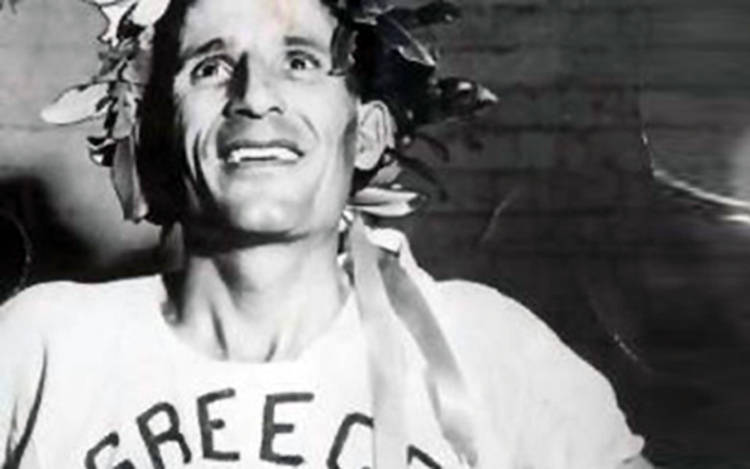
The Boston Marathon was one of the most difficult of the era. Favorites for the 1946 event were Englishman Kenneth Bailey and American, last year's winner, Johnny Kelly. Nobody counted the "skinny" Stelios Kyriakidis, suffering from the hunger of the Occupation.
The marathon runner had also participated in the 1930 event, but left because the new sports shoes given to him by Greek expatriates hurt his feet. "I will not give up this time. "I came to run for 7.000.000 hungry Greeks," he said everywhere.
But even the doctors had objections to his participation, while the newspapers ironically called him "the skinny Greek".
Kyriakidis, however, was determined to run and nothing could stop him. He signs a responsible statement that he is aware of the danger and is preparing for the fight, a fight that would go down in history.
Stelios Kyriakidis asks the committee to run with the number "7" and they gave him the "77". The athlete not only was not disappointed but thought he would be twice as lucky.
It started slowly and accelerated halfway. Because he had not run a marathon for more than six years, he started saving energy by the middle of the race. And somewhere there is where he feels he has the strength to achieve his goal. He passed one athlete after another. He ran for all the Greeks and victory was for him a one-way street.
An expatriate, wanting to help him, gave him an orange, but he got confused at his feet and delayed the marathon. A few kilometers before the end, Kyriakidis hears a Greek shouting at him: “For Greece, my Stelios. For your children ".
His words put wings on his feet. He gathers all his physical reserves, passes the champion Johnny Kelly and finishes first shouting: "For Greece". His time, 2:29:27, was the best in Europe and for 22 years the best in Greece.
It is said that when Johnny Kelly was asked "how did he lose to the Greek skinny?", He replied: "Only I lost? No one could beat him. "I was running for myself and he was running for an entire people."
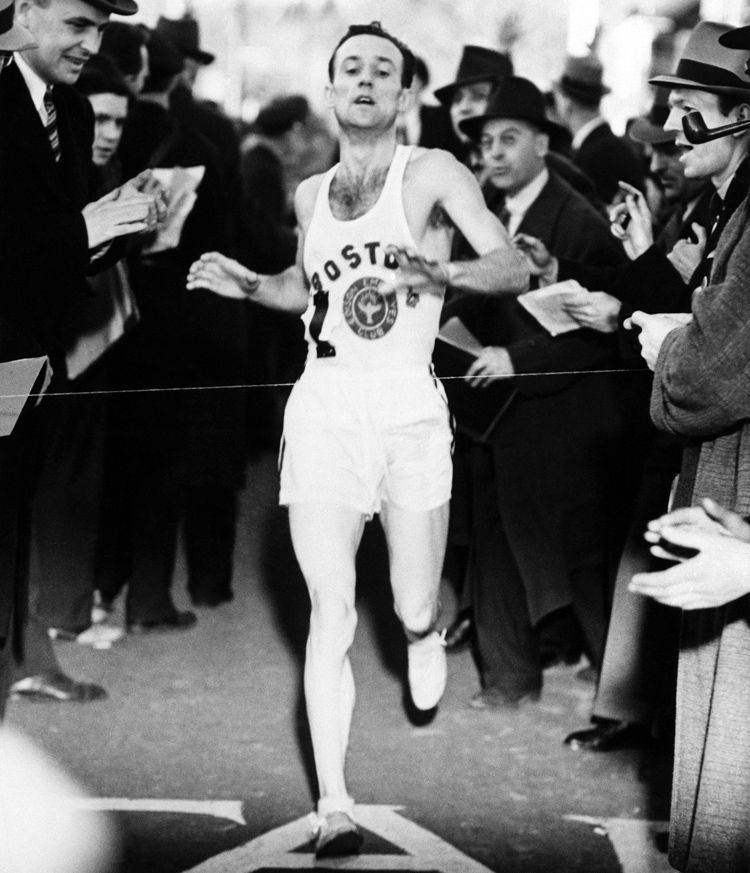
From the stories of his father, Dimitris Kyriakidis states: "At some point, when he was second, a Greek spectator shouted at him:" My Stelio, even second ". This made him say: “Why second? I will go out first ". He took a breath, surpasses Kelly and beats him by two minutes. "
His victory opened doors for him but all he wanted and asked for was one: "I want you to send clothes and food to the 7.000.000 Greeks who are starving. This is what I am asking for. Help my suffering people. Please, do not forget my country "he said and said again.
His victory and his words sensitized expatriates and Americans. $ 250.000 was raised, while a Greek shipowner transported food, clothes and medicine with his two ships. This aid was named "Kyriakidis Package".
On May 23, 1946, Kyriakidis returned to Greece and 1.000.000 Greeks welcomed him with heroic honors. "I am proud to be Greek," he said and was moved. An official ceremony was held at the Pillars of Olympian Zeus, where the speech of Stelios Kyriakidis caused a shudder of emotion in the gathered crowd. The return to his home in Filothei took 8 hours. For the first time after the Occupation, the Acropolis was illuminated in his honor.
He was a "descendant of Pheidippides", as the American media called Stelios Kyriakidis, the first Greek to win the Boston Marathon in 1946.