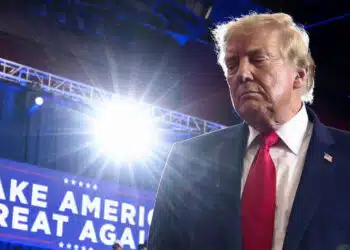
US President Donald Trump announced "the largest trade deal" ever reached between the US and the European Union during talks he had today in Turnberry, Scotland, with European Commission President Ursula von der Leyen.
According to Trump, the tariffs imposed on European products exported to the US will amount to 15%. Tariffs on steel and aluminum "remain as they are," he added.
The EU will buy military equipment and energy worth $150 billion from the US and will make investments worth $600 billion.
This is an agreement that prevents, at least for the time being, the imposition of 30% tariffs on European products, as Washington had threatened in the event of no agreement by August 1.
Donald Trump described the negotiations as "very interesting" and the agreement as "great" for both sides, insisting that the main issue was fairness in trade.
Ursula von der Leyen, for her part, spoke about the need to balance the trade relationship, recalling that the United States and the European Union are the two largest trading partners in the world.
Donald Trump has made it clear that he will not accept a lower rate.
Brussels believes it has averted a direct trade conflict. However, the goal of zero tariffs on industrial goods has not been achieved.
Energy issues and LNG purchases from the United States, as well as armaments, were also raised on the negotiating table, with Donald Trump stating that the European Union had agreed to purchase American military equipment, but without providing further details.
The Republican president called on the EU to expand markets, not only towards the United States, but in general, by adopting a stance of open and reciprocal trade.

Trump: Congratulations on the deal
"Congratulations on the deal," Trump said.
Earlier, Trump said that tariffs on EU exports would not be lower than 15%, during a meeting with Ursula von der Leyen at his family's luxury golf course in Turnberry, western Scotland.
Specifically, the American president answered "no" when asked by a reporter if he was able to agree to a lower tax.
He added that pharmaceutical products will not be included in this agreement and that the deadline he has given, until August 1, "applies to all agreements," except those concerning steel and aluminum.
Trump made the statement at the start of his meeting with European Commission President Ursula von der Leyen in Scotland. He noted that the main issue between the two sides is “fairness,” pointing to barriers to US exports of cars and agricultural products to the EU. “The European market is very closed,” he commented.
Ursula von der Leyen: The agreement brings stability – It achieves certainty in uncertain times
Von der Leyen welcomed a "good deal" that will bring "stability" for businesses on both sides of the Atlantic.
"Today's agreement achieves certainty in uncertain times," he noted.
He said the 15% tariffs would apply to most European exports, including cars, semiconductors and pharmaceuticals. For the auto industry in particular, he said the 15% tariffs were “the best we could achieve.
Specifically, referring to the details of the trade agreement, Von der Leyen emphasized that a "single tariff rate of 15%" is provided for the vast majority of EU exports, which applies to most sectors, including cars, semiconductors and pharmaceuticals.
In addition, she said that zero tariffs were agreed on a number of strategic products: all aircraft and their components, certain chemicals, certain generic medicines, semiconductors, certain agricultural products, natural resources and critical raw materials. “We will continue to work to add more products to this list,” von der Leyen noted.
On steel and aluminum, von der Leyen said the EU and the US face the common external challenge of global overcapacity and will work together to ensure fair global competition and reduce barriers between them. Tariffs will be reduced and a quota system will be put in place.
Finally, Von der Leyen said that it was agreed to increase EU-US cooperation in the energy sector. "Buying American energy products will diversify our sources of supply and contribute to Europe's energy security," she stressed, adding that Russian natural gas and oil would be replaced with significant purchases of American liquefied natural gas.
The Commission President thanked US President Donald Trump "for his personal commitment and leadership in achieving this significant success", saying that he is "a tough but capable negotiator".
Before the talks began, he described Trump as a "tough negotiator," emphasizing that if the two sides reach an agreement, it will be the most important one achieved so far for both.
China in the spotlight
"By announcing the agreement with the EU, immediately after those in previous days with Japan, Vietnam, the Philippines and Indonesia, was Donald Trump trying to divert attention from the Jeffrey Epstein case, which has returned to the spotlight?"
A reporter asked the Republican president the question directly. "Are you kidding me? It's not relevant. Only you think about this, today is a good day for the European economy and the American economy," Trump replied dryly.
Tomorrow, it will be China's turn and negotiators from the two countries will try to avoid a new escalation at their meeting in Stockholm.
Source: ertnews.gr